What Is the Anion Gap?
The anion gap is a computed value that assists clinicians determine the discrepancy between commonly measured electrolytes in the blood. It is most often used as a diagnostic clue in metabolic acidosis, where it can help identify whether an acid load or other unmeasured anions are present.
At its core, the anion gap shows the relationship between sodium, chloride, and bicarbonate. Because the body maintains neutral charge, the measured positive and negative charges should remain equal. When they do not, the gap can point toward an electrolyte imbalance or another metabolic disturbance that needs further assessment.
The anion gap is not a direct measurement. Instead, it is a derived estimate that supports acid-base balance assessment and broader acid-base disorders workups. In practice, it is best viewed as a screening and interpretation tool rather than a independent diagnosis.
How the Anion Gap Calculator Operates
An anion gap calculator relies on a straightforward formula based on standard lab values. The usual method is:
Anion gap = Sodium − (Chloride + Bicarbonate)
Some calculators also include potassium, even though many doctors exclude it because the value often contributes little to day-to-day interpretation. With potassium included, the formula becomes:
Anion gap = Sodium + Potassium − (Chloride + Bicarbonate)
This process relies on blood electrolytes from a serum chemistry panel or more comprehensive metabolic panel. The answer helps identify whether there may be a accumulation of acid load or another shift in electrolytes. As bicarbonate is frequently decreased in acidosis, the calculator is especially useful in the assessment of serum bicarbonate values and related acid-base interpretation.
The calculator is a valuable diagnostic aid because it transforms everyday laboratory values into a more useful assessment of acid-base status. When used properly, it supports clinical decision making by identifying patterns that deserve further attention.
Standard Anion Gap Versus Increased Anion Gap Acidosis
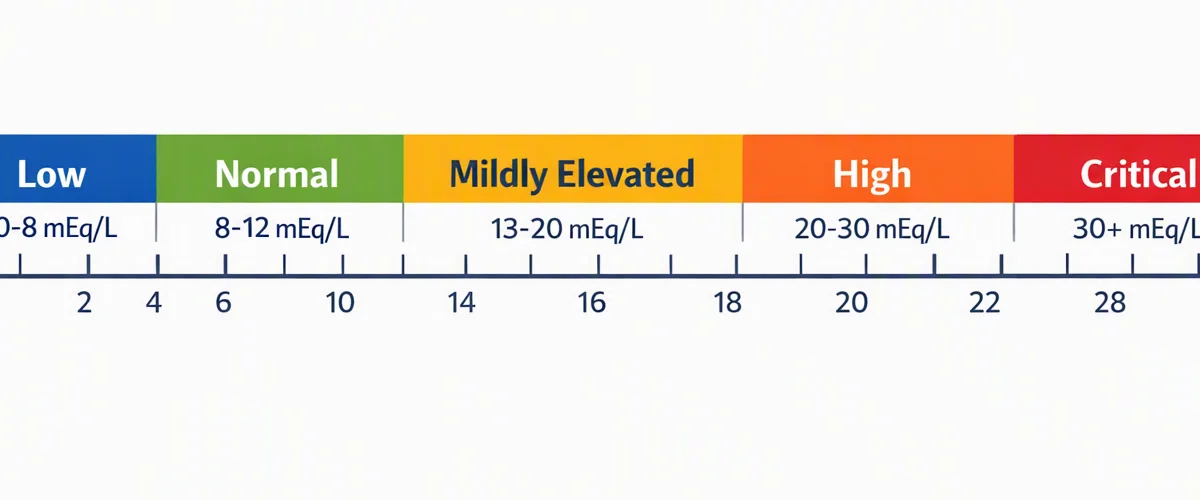
Recognizing the distinction between standard anion gap metabolic acidosis and high anion gap metabolic acidosis is crucial for accurate interpretation. Each are forms of metabolic acidosis, but they arise from distinct mechanisms.
In typical anion gap metabolic acidosis, the bicarbonate decreases, but the loss is usually matched by a gain in chloride. This pattern is often called hyperchloremic acidosis. The anion gap stays within the expected range because the decrease in one measured ion is compensated by an increase in another.
In high anion gap metabolic acidosis, bicarbonate drops and there are additional unmeasured acids in the blood. These acids leave behind their anions, which increases the gap. This pattern indicates a greater accumulation of unmeasured anions and typically requires a search for causes such as lactic acidosis, ketoacidosis, renal dysfunction, or toxic exposures.
In practice, the distinction matters because it limits the differential diagnosis. A standard anion gap pattern suggests toward causes of bicarbonate loss, while a increased anion gap pattern points toward acid production, acid retention, or impaired clearance.
Understanding the Result
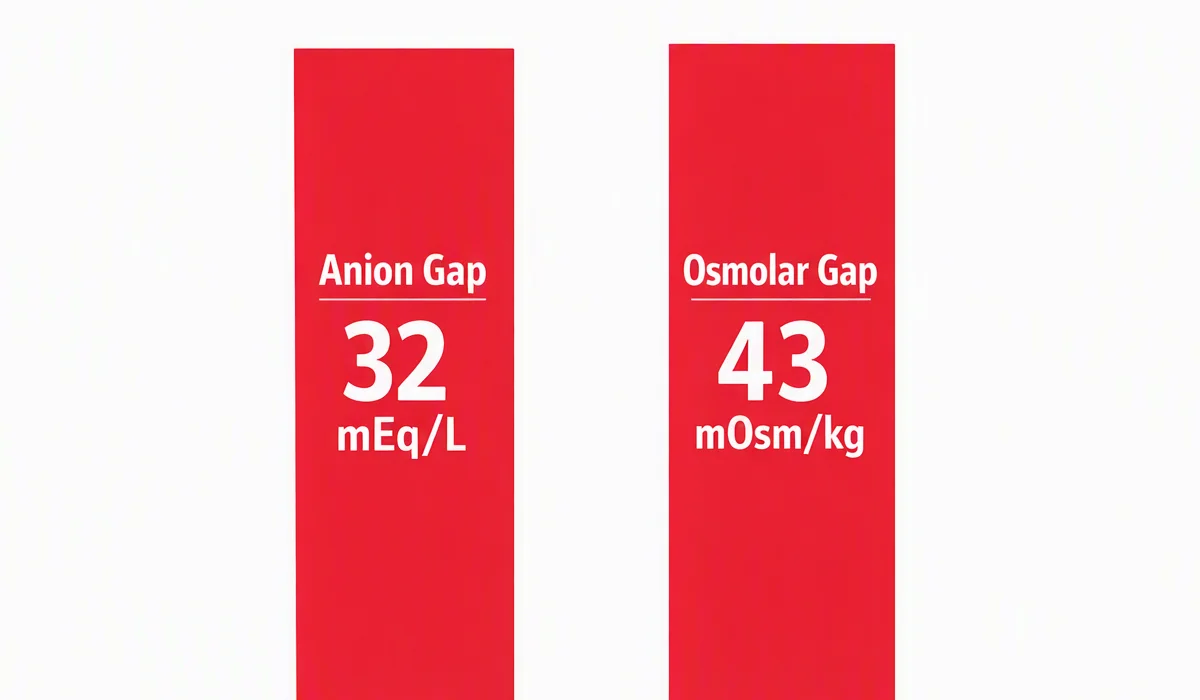
Interpreting an anion gap result demands more than comparing the number to a reference range. The first step is to see whether albumin is low, because albumin is a major unmeasured anion and greatly influences the value. When albumin is reduced, the gap may look falsely normal even when clinically important acidosis is present.
This is where the corrected anion gap becomes important. The correction adjusts the measured result upward when albumin is low, improving diagnostic accuracy. This process is often called albumin adjustment or anion gap correction, and it can reveal hidden high-gap acidosis that would otherwise be missed.
The delta gap is another helpful concept. It compares the change in anion gap to the change in bicarbonate and can uncover mixed acid-base disorders. For example, a patient may have high anion gap acidosis plus a concurrent metabolic alkalosis, which can make the bicarbonate appear less reduced than expected.
Accurate interpretation always integrates the calculator result with the patient’s clinical assessment. Symptoms, history, medications, renal function, and other laboratory findings matter. A single number rarely gives the full picture.
Helpful interpretation questions include:
- Is the anion gap truly elevated after albumin correction? Is the bicarbonate change match the expected pattern? Are there signs of mixed acid-base disorders? Does the clinical context suggest lactate elevation, ketones, renal impairment, or toxins?
Typical Causes of Elevated Anion Gap
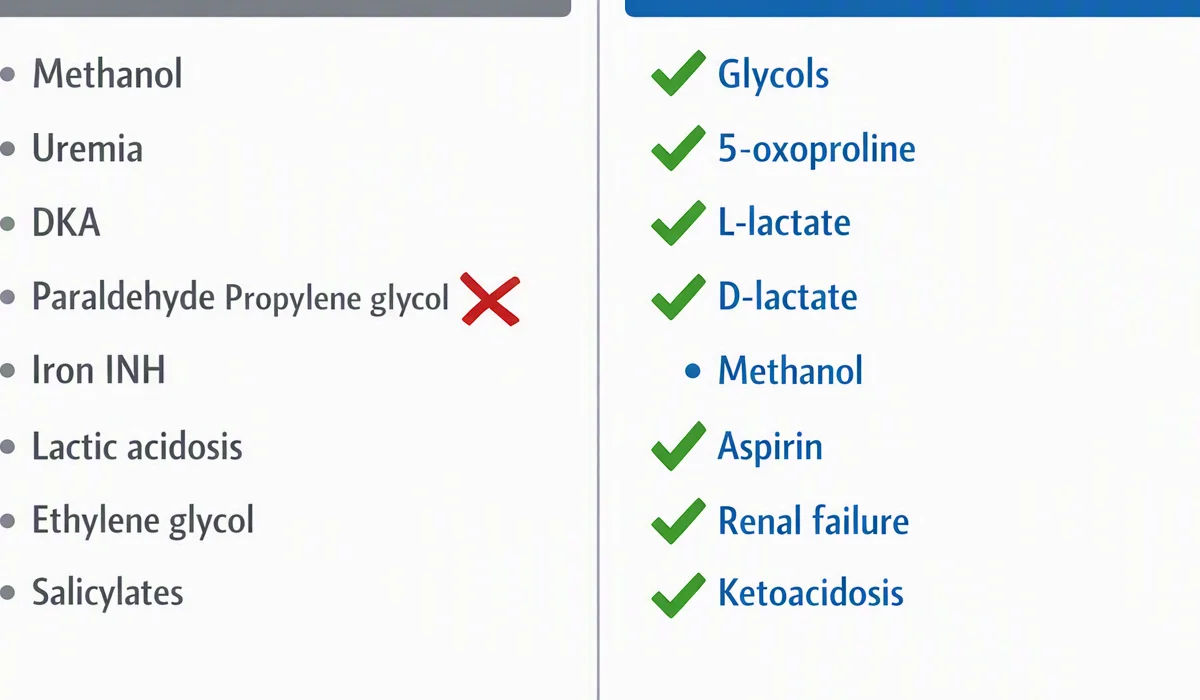
An elevated anion gap usually means that additional acids are present or that acid clearance is impaired. The most common causes include lactic acidosis, ketoacidosis, renal failure, uremia, and certain toxins.
Lactic acidosis develops when lactate builds up, often due to tissue hypoperfusion, severe illness, seizures, or other states of increased anaerobic metabolism. As lactate is an unmeasured anion, the anion gap rises as bicarbonate falls.
Ketoacidosis can develop in diabetes, prolonged fasting, or alcohol-related metabolic states. Ketone bodies act as unmeasured acids, producing a high anion gap metabolic acidosis that often requires urgent treatment.
Renal failure and uremia limit the body’s ability to excrete acid and retain normal acid-base homeostasis. As retained acids accumulate, the anion gap can rise substantially.
Toxins are another key category. Certain ingestions can cause profound acid-base disruption and may present with an increased gap. In these cases, the calculator is simply one part of the evaluation, not the entire diagnosis.
Other causes may also exist, but these major categories account for many clinically important cases of elevated anion gap metabolic acidosis. Spotting the pattern helps guide appropriate testing and faster treatment.
Diagnostic Setting and Caveats
This anion gap is helpful, but it has notable limitations. A result must always be read alongside the blood gas, serum chemistry panel, and the broader clinical context. The calculator cannot substitute for bedside judgment or the full evaluation of acid-base disorders.
One limitation is differences in the laboratory reference range from one lab to another. Different analyzers, different measurement methods, and different inclusion or absence of potassium can all affect the value. That means a “normal” number in one setting may not match exactly in another setting.
Another limitation is the effect of albumin. Without correction, the anion gap may miss clinically meaningful abnormalities. Also, the gap does not determine the exact acid responsible; it only suggests that unmeasured anions may be present.
A blood gas helps confirm acid-base status by showing pH and carbon dioxide, while the serum chemistry panel delivers the electrolyte data needed for calculation. Taken together, these results aid more accurate diagnostic interpretation. The best use of the calculator is as part of a structured patient evaluation, not as a stand-in for it.
Common pitfalls include:
- Thinking a normal gap excludes all clinically significant acidosis Missing low albumin when evaluating the result Failing to compare the gap with bicarbonate using the delta gap Using the calculator without considering the blood gas and clinical context
Step-by-Step Illustrative Calculations
An example calculation helps show how the formula works in practice. Consider these electrolyte measurements:
- Sodium: 140 Chloride: 102 Bicarbonate: 18
With the formula, the anion gap is:
140 − (102 + 18) = 20
This value indicates a high anion gap metabolic acidosis, if the local reference range is lower than 20. The next step would be to evaluate the clinical picture for causes such as lactic acidosis, ketoacidosis, renal failure, or toxins.
Now add albumin to the picture. If albumin is low, the measured gap may understate the problem. A corrected anion gap can be calculated using albumin adjustment to improve the estimate of the true burden of unmeasured anions.
For a second example, imagine a patient with the following values:
- Sodium: 138 Chloride: 112 Bicarbonate: 18
The calculation is:
138 − (112 + 18) = 8
This may fit a normal anion gap metabolic acidosis pattern, especially if bicarbonate is low and chloride is relatively high. In that setting, the interpretation may point more toward bicarbonate loss rather than excess unmeasured acids.
In a more advanced case, the corrected bicarbonate and the delta gap can be used together. If the anion gap is elevated but bicarbonate is not as low as expected, a mixed disorder may be present. That kind of interpretation is especially valuable when acid-base balance is complex and multiple processes overlap.
These examples show why calculator use is only the first step. The final interpretation depends on whether the numbers match the clinical story and whether additional testing supports the same conclusion.
FAQ for the Anion Gap Calculator
What does Anion Gap Calculator measure?
An Anion Gap Calculator measures the variation between the main measured electrolytes, usually sodium, chloride, and bicarbonate. The result helps determine whether there are excess unmeasured anions in the blood and helps evaluate metabolic acidosis and other acid-base disorders.
What is a normal anion gap range?
The normal anion gap range varies with the laboratory https://privatebin.net/?e131e6ed2d5b3385#3PL26CmPhXE9KHj7Wm4gkaSGDWjeCnshyWRp242mTmxq reference range used by the testing method. Because labs differ, it is best to read the result using the reference range provided with the patient’s serum chemistry panel and the overall clinical context.
Why do you correct the anion gap for albumin?
You correct the anion gap for albumin because albumin is a major unmeasured anion. When albumin is low, the measured anion gap may appear falsely normal. Correcting for albumin improves diagnostic accuracy and helps reveal hidden metabolic acidosis.
What can cause a high anion gap metabolic acidosis?
Common causes include lactic acidosis, ketoacidosis, renal failure, uremia, and toxins. These conditions raise unmeasured anions or impair acid clearance, which raises the anion gap and lowers bicarbonate.
In what way is the delta gap used in anion gap interpretation?
The delta gap compares the change in anion gap with the change in bicarbonate. It helps identify mixed acid-base disorders, such as high anion gap metabolic acidosis combined with metabolic alkalosis or a normal anion gap process. This makes interpretation more precise during patient evaluation.